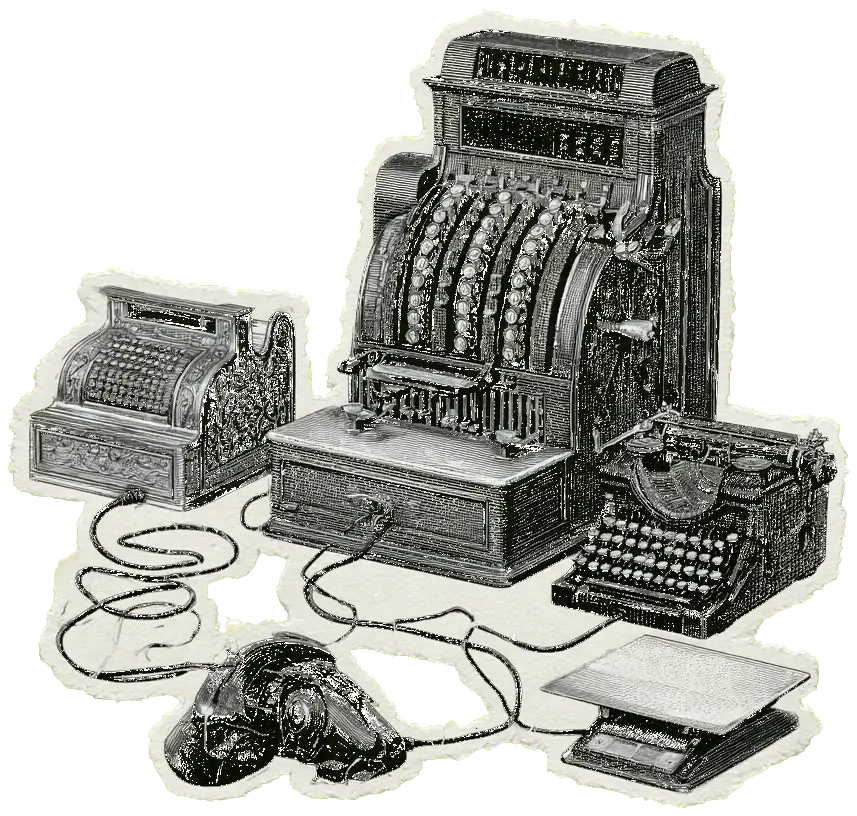
An ERP is only as useful as the systems it talks to. If orders live in the CRM, counts live on paper, and the webstore does not know what the warehouse has, somebody on your payroll spends part of every week carrying data between systems by hand.
ERP integration is how that stops. We connect your ERP to the CRM, the storefront, accounting, and the rest, so a record entered once lands everywhere it is needed.
What disconnected systems cost
The cost shows up as hours first and trust second. Every gap between two systems is covered by a person: the webstore order retyped into the ERP, the export that reconciles the CRM against the invoices. Then the copies drift. Ops reads one number, finance reads another, and somebody calls a meeting to find out which is right.
None of it is anyone's fault. Most companies build their technology a piece at a time, and every company carries tech debt. That comes with growing. The trouble is that the connection between two systems never makes the list, because tech debt has always been someone's second job. Meanwhile the gap widens: another sales channel, another warehouse, a new acquisition still running its own ERP while the board wants one set of numbers it can trust.
What is ERP integration?
ERP integration is the work of connecting an enterprise resource planning system to the other software a business runs: the CRM, the ecommerce storefront, accounting, inventory, shipping. Once connected, a record is entered one time and every system that needs it has it, with nobody retyping and no export sitting in somebody's downloads folder.
Most systems get connected through APIs, the openings modern software provides so other software can read and write to it. Older systems without a clean opening take more care, and knowing which route will hold is part of the job. Either way, integration starts from what you already run. The ERP stays. The CRM stays. Nothing is ripped out and replaced. What changes is that your people stop being the ones carrying records between screens.
What we connect to the ERP
ERP integration services at Pentangle sit inside a wider practice, your systems finally talking to each other, and these are the usual connections:
- CRM and ERP integration: the customer, the quote, and the order in both systems with nobody retyping them, so sales and ops work from the same numbers
- Ecommerce and ERP integration: webstore orders landing in the ERP as they come in, and stock levels flowing back to the storefront
- Accounting and finance: invoices and payments posted once, so the close stops leaning on exports and a reconciling spreadsheet
- Warehouse and inventory: a count entered once, straight into the system, the day it is taken
- Spreadsheets and homegrown tools: the one a single department runs on, connected so its numbers reach the systems that need them
The payoff compounds. An order keyed in once that reaches every system that needs it. Our day job. And the same plumbing makes the next project smaller: a quote your customer gets online the moment they ask only works when the systems behind it are connected.
How we build an ERP integration
We look at the whole business before we build anything. That is how we find the connection worth building first, and the hidden step one department does its own way that the integration has to carry, or nobody will use it. The work runs in order:
- A look at the whole business.We sit with the people who run the work and hear the problem in their words: what gets keyed twice, and which two numbers never match.
- The real issues, put in order.You get the connections ranked by what they give back, so the first build makes the case for the second. No someday list.
- Built to your spec.We build the connection you asked for. If we think the spec should change, we say why, and you decide.
- A first working version, then a feedback loop.The people who touch these systems daily use the connection early and keep shaping it until it is something they trust.
Putting the projects in order includes a straight answer on build versus buy. Where a connector you can license already covers the handoff, we say so. Where a license for every user is the expensive road, we show the math on building the connection instead. We do not custom-build big systems without a strong reason.
Why do ERP integration projects fail?
Mostly because the integration was somebody's second job. It got specced in spare hours, built around the real work of the day, and parked the first time something urgent landed. The quieter failures: a spec rewritten into something nobody asked for, and a connection designed without the people who would have to trust it. A new system has a ripple effect: it changes the day of somebody who never even touches it, and a build that ignores those people fails. They installed the new ERP and never asked the warehouse crew? That is how a company ends up with an integration on paper and a spreadsheet in practice.
Bringing us in changes the first condition: the connection becomes the job someone was brought in to do, with the operators heard first and the spec honored.
Who does the work
We lead the work ourselves, with specialists we trust brought in as the work needs them.
We have built systems and run technology as a CTO, for whatever industry came through the door, and we get to conversational knowledge of a new business quickly. Our particular skill is translation: what ops means, said so a developer can build it, and what the build changes, said so finance believes it. Integration work lives or dies in exactly those gaps.
The work is a we, on purpose. If your worry about bringing in outside help is that everything ends up in one person's head, that is why Pentangle is built this way: the specialist comes in on the part they know deepest, and your point of contact stays domestic. And industrial companies, where the systems went in years ago and nobody touched them again, are squarely who this is for.
One connected run, from the quote to the shipping dock
Before Pentangle, our founder built a fully connected run for a die cutting business. A customer's quote became a payment, and the system then reserved the inventory, created the jobs, told people where to move things, and moved the job through to shipping. One record, entered when the customer asked for a price, carried the work all the way to the dock. It was built so three people could run the whole business.
ERP integration questions
An integrated ERP system is an ERP connected to the other software the business runs, so records flow between them automatically instead of through exports and retyping. The phrase also gets used for an ERP whose own modules share one database. Either way, the test is the same: enter a record once, and everything that needs it has it.
System integration is making separate software systems pass data and trigger work in each other without a person in the middle. ERP systems integration is the version where the ERP sits at the center, because that is where the orders, inventory, and money already live. System integrations are one of our core service lines, for the ERP and everything around it.
ERP stands for enterprise resource planning. In a supply chain it is the system of record from the purchase order to the paid invoice, and from the receiving dock to the shipping dock: what was ordered, what arrived, what is on the shelf, what shipped, what got billed. Integrated with the storefront, the CRM, and the warehouse tools, it keeps those answers current without anyone retyping them.
No. Integration connects the systems you already run; nothing gets ripped out. We are also pragmatic about build versus buy: where a licensed connector covers the handoff, we say so, and where custom clearly pays, we show you why and you decide. A whole new platform is a big answer to one broken handoff, and we tell you when a smaller one does the job.
They can. An update can change how the ERP exposes its data and snap a connection that was built brittle. That break is tech debt like any other, and we take it on whether or not we built the original connection. It is also why a build here ends with a first working version and a constant feedback loop with the people who use it.
Start with the two systems that cost you the most
Tell us which two systems have never talked and what your people do by hand to cover the gap. That is enough for a first conversation. We look at the whole business, put the connections in order, and build the first one to your spec, with the people who use it in the loop from the first working version. If it is time to get your ERP and CRM on speaking terms, that is the conversation to start. Your tech debt. Our day job.